
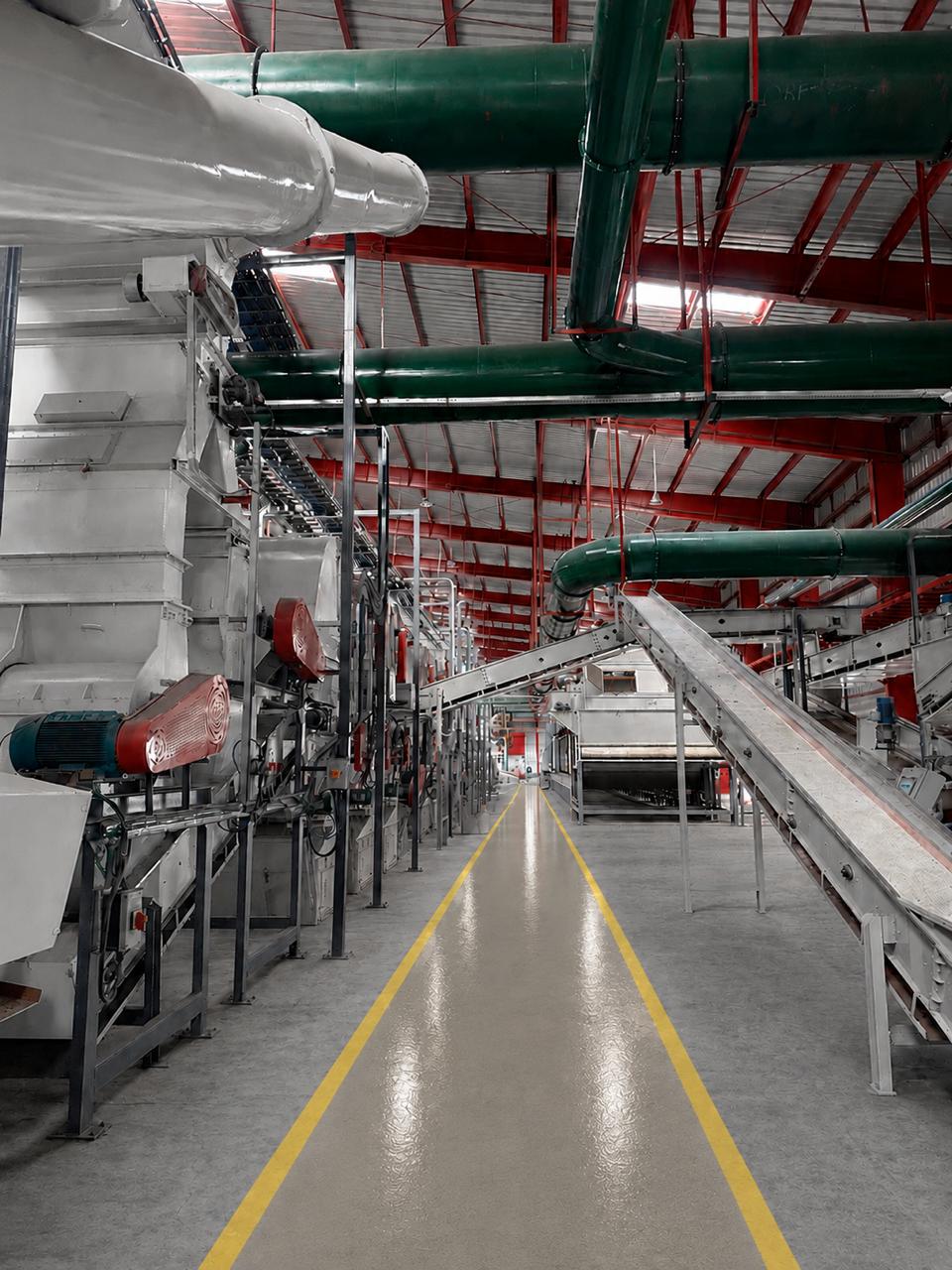
The tobacco processing industry is evolving alongside broader industrial manufacturing. As processing facilities become larger and more technologically advanced, the focus is increasingly shifting from individual machines to integrated systems that combine processing capacity, automation, quality control, safety and resource efficiency.
Modern tobacco processing is therefore about more than threshing tobacco leaf. It is about creating a controlled industrial environment in which tobacco can be received, conditioned, processed, separated, dried, inspected and packed efficiently.
At Tabac Leaf Enterprises, this approach is reflected in the company's focus on advanced processing infrastructure and responsible industrial operations.
How Does Modern Tobacco Processing Work?
A modern tobacco processing facility can incorporate multiple interconnected stages. The process typically begins with receiving and preparing the leaf. Depending on the grade and material characteristics, conditioning and blending may then be used to prepare the material for threshing.
The tobacco subsequently passes through multi-stage threshing and separation systems. After separation, lamina and stem materials can be processed through appropriate drying and handling systems before quality inspection and packing.
The integration of these stages is important because each process influences the next.
How Does Automation Improve Processing?
Automation can improve visibility and control across industrial operations. In a large-scale tobacco processing plant, manually coordinating every process would be difficult and inefficient.
PLC/SCADA-based systems can provide centralized process monitoring and control, helping operators manage equipment and processing stages more systematically.
At Tabac Leaf Enterprises, automated PLC/SCADA process-control infrastructure forms part of the industrial processing environment. Automation is particularly valuable when combined with experienced operators and clearly defined processing procedures. Technology provides control; people provide judgement and operational expertise.
How Does Tobacco Threshing Support Efficient Processing?
Threshing is one of the central operations in industrial tobacco leaf processing. The purpose of tobacco leaf threshing is to separate tobacco components in a controlled mechanical process.
Modern multi-stage threshing systems are designed to manage this separation while supporting continuous industrial throughput.
Tabac Leaf Enterprises operates processing infrastructure with a 14 TPH facility through B.K. Threshers Private Limited and an 8 TPH facility through Tabac Leaf Enterprises LLP. The combined installed capacity of 22 TPH provides the industrial foundation for large-scale tobacco processing operations.
How Does Quality Control Fit Into Sustainability?
Sustainability is often discussed only in terms of environmental performance, but responsible industrial processing is broader than that. Efficient processing, quality control, safety and resource management are all interconnected.
When processing systems are properly controlled, material handling can become more systematic and unnecessary process losses can potentially be reduced. Laboratory facilities and inspection systems also support better understanding of the material being processed.
At Tabac Leaf Enterprises, quality infrastructure forms an important part of the processing ecosystem.
How Can Dust Management Improve the Processing Environment?
Tobacco processing involves mechanical movement and separation of agricultural material. Industrial dust management is therefore an important consideration for processing facilities.
Dedicated dust-collection infrastructure can help manage airborne particulate matter generated during processing and contribute to a more controlled working environment. For a modern tobacco processing company, dust management should be considered part of overall facility design rather than an isolated afterthought.
Tabac Leaf Enterprises incorporates dust-collection systems within its processing infrastructure.
How Does Resource Efficiency Matter?
Every industrial process uses resources. Energy, water, materials, equipment and human effort all contribute to the operation of a processing facility.
Resource-efficient tobacco processing therefore depends on designing operations carefully, monitoring processes and maintaining equipment effectively. Automation can help operators understand processing conditions, while properly maintained equipment can support reliable operation. The objective is to develop systems where capacity, quality and operational efficiency work together.
How Does Safety Support Responsible Operations?
A responsible processing facility must also prioritize industrial safety. Large-scale tobacco processing plants contain mechanical equipment, electrical systems, material-handling systems and industrial utilities.
Fire-protection systems, appropriate operational procedures and controlled facility design therefore form an important part of responsible industrial operations. Tabac Leaf Enterprises incorporates fire-protection infrastructure alongside its industrial processing systems. Safety is not separate from productivity. A well-managed facility requires both.
How Does Grade Diversity Affect Processing?
Tobacco grades can vary considerably in physical and chemical characteristics. The Tabac Leaf Enterprises catalogue covers Mysore FCV, Traditional FCV, NLS FCV and Vinukonda Burley grades.
Different materials can exhibit differences in colour, body, maturity, leaf position, nicotine and sugar characteristics. This means processing systems must be designed to accommodate material diversity. Conditioning, blending, threshing, separation and drying all need to work together to support appropriate processing conditions for different tobacco materials.
Responsible Processing Across the Tobacco Value Chain
Tobacco processing sits between agricultural production and industrial manufacturing. A responsible approach therefore requires awareness of both sides of the value chain.
Agricultural experience can help processors understand the variability of incoming leaf, while industrial processing expertise helps convert that material through controlled systems. Tabac Leaf Enterprises has supporting experience in tobacco cultivation across approximately 300 acres, alongside its primary focus on industrial tobacco processing and threshing.
This broader understanding helps connect agricultural characteristics with processing requirements.
The Role of Technology in the Future
The future of tobacco processing will increasingly depend on data, automation and process visibility. Industrial facilities can use technology to improve monitoring, optimize equipment performance and strengthen quality-control systems.
However, technology should support-not replace-fundamental processing principles.
The strongest results come when these elements work together.
Building a More Responsible Processing Model
Modern tobacco processing needs to balance several priorities. It must have sufficient capacity to meet industrial requirements. It must maintain consistent processing and quality. It must provide appropriate safety and dust-management infrastructure. It must use technology intelligently. And it must continually look for opportunities to improve resource efficiency and operational performance.
This is the direction in which Tabac Leaf Enterprises continues to build its processing capabilities.
Advanced Processing. Proven Capability. Consistent Quality.
Conclusion
Modern tobacco processing is a complex industrial activity combining agricultural material, mechanical processing, automation, quality control and responsible facility management. From tobacco threshing and lamina separation to drying, laboratory inspection, dust collection and PLC/SCADA process control, each element contributes to the overall processing environment.
For Tabac Leaf Enterprises, sustainability is therefore closely connected to how efficiently, safely and responsibly tobacco is processed.
The goal is straightforward: Advanced Processing. Proven Capability. Consistent Quality. And behind that goal is a continued commitment to building capable, technology-enabled and responsible tobacco processing operations.