
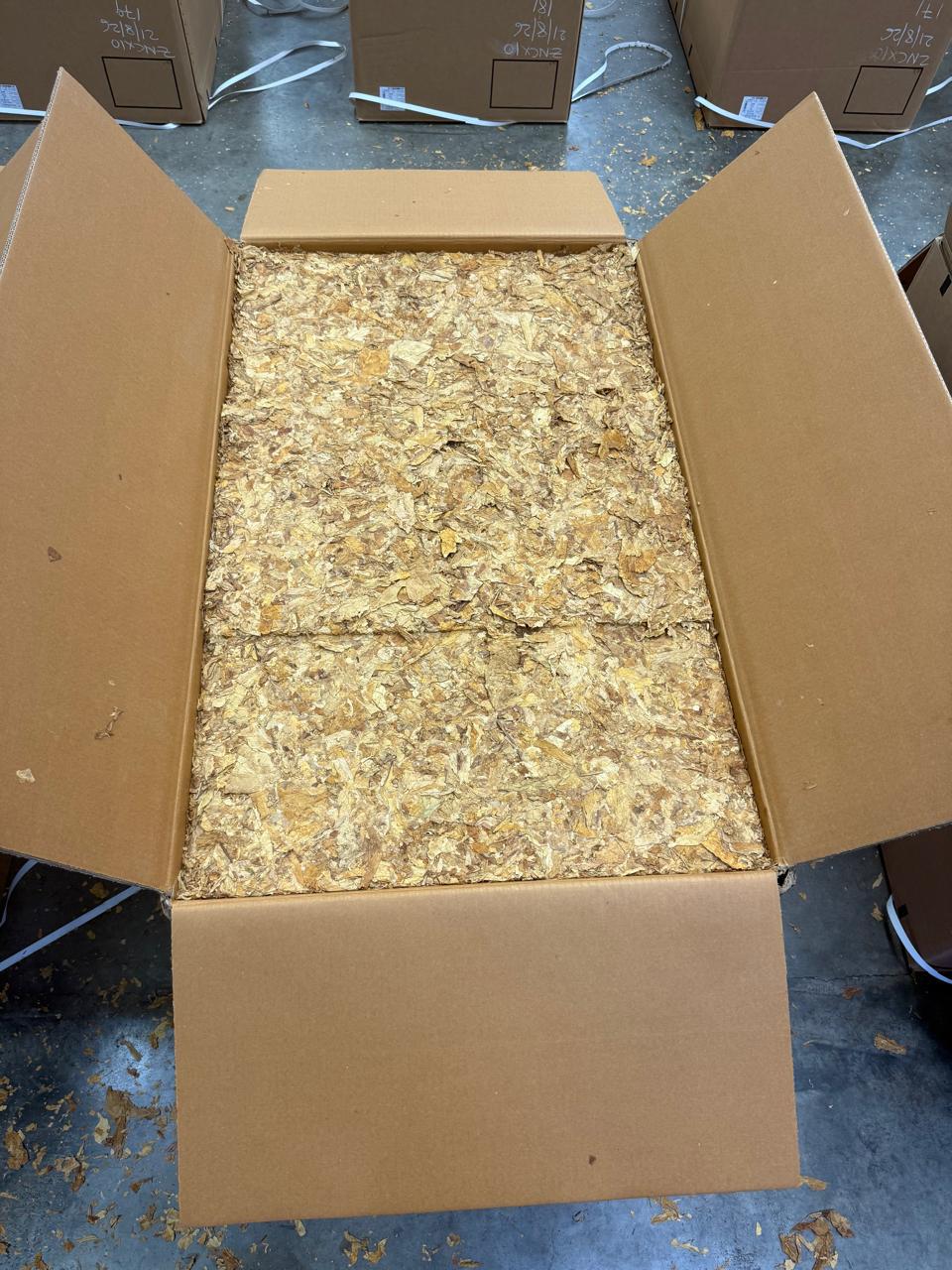
Tobacco is not a single uniform agricultural product. Different varieties, growing regions, leaf positions, maturity levels and curing characteristics can result in significantly different tobacco grades.
For businesses involved in tobacco leaf processing, understanding these differences is essential. Grade classification helps describe the characteristics of tobacco leaf and provides a common reference for buyers, processors and other participants in the tobacco value chain.
At Tabac Leaf Enterprises, our Tobacco Grade Catalogue brings together an extensive range of grades across Mysore FCV, Traditional FCV, NLS FCV and Vinukonda Burley.
What Does a Tobacco Grade Tell Us?
A tobacco grade is a structured method of describing particular physical, visual and chemical characteristics of processed or unprocessed tobacco leaf. Depending on the variety and grading framework, descriptions consider:
- Leaf Position & Type: Primings, lugs, cutters, and leaf positions
- Visual Characteristics: Lemon orange, orange, deep orange, tan, and dark colour profiles
- Body & Maturity: Ripe, mature, immature, oily, and heavy-bodied leaf
- Quality Category: First choice, standard, and lower-stalk material
- Processing Characteristics: Threshability, lamina yield, and moisture behaviour
- Chemical Composition: Indicative nicotine ranges and sugar ranges
- Packing Format: Bales, cartons, and moisture-controlled packaging
A tobacco grade catalogue therefore serves as much more than a list of product codes. It provides an authoritative technical reference for understanding the characteristics associated with different industrial materials.
Mysore FCV is one of the premier categories represented in the Tabac Leaf Enterprises catalogue. Mysore FCV grades include different combinations of lugs, cutters, leaf and primings, with descriptions referring to characteristics such as lemon orange, orange, deep orange and brown colour profiles.
The catalogue distinguishes carefully between ripe, mature and immature tobacco to support exact blending profiles:
The catalogue provides specific indicative nicotine and sugar ranges for each grade in this category.
Traditional FCV represents another vital category within Indian tobacco production. Grades in this category include leaf and cutter materials with characteristics ranging from lemon orange to vibrant orange and rich deep orange.
The catalogue reflects clear distinctions between ripe, mature and unripe leaf:
Lower-position materials such as primings and lugs are systematically classified, confirming that different parts of the plant offer distinct processing qualities.
Northern Light Soils (NLS) FCV tobacco is renowned for its distinctive body, style and chemical characteristics. Grades such as NCX1O and NCX2O describe lugs and cutters with lemon orange, orange and deep orange profiles.
NL grades represent leaf materials with oily texture and full maturity, complemented by lower-position NX grades.
Burley tobacco has fundamental characteristics that distinguish it from Flue-Cured Virginia (FCV) categories. It undergoes air-curing rather than flue-curing, resulting in distinct physical and chemical attributes.
Descriptions refer to tan, bright tan, deep tan and dark colour profiles. The listed sugar ranges for Burley grades are considerably lower than those found in FCV grades.
Why Does Nicotine Matter?
Tobacco nicotine content is one of the primary chemical characteristics referenced when evaluating grades. Different varieties, stalk positions and curing conditions naturally exhibit different nicotine levels. In the Tabac Leaf Enterprises catalogue, nicotine values are presented as indicative ranges rather than single static numbers.
This is useful because agricultural and processing variables can influence the characteristics of tobacco. Nicotine should therefore be understood as one component of a broader grade profile rather than as the sole indicator of tobacco quality.
Why Do Sugar Levels Matter?
Sugar is another important chemical characteristic used in tobacco grade descriptions. The tobacco sugar content ranges in the catalogue vary significantly between grades. Some FCV grades show relatively higher listed sugar ranges, while certain lower-position or Burley grades have lower ranges.
Together, nicotine and sugar provide chemical reference points that complement physical descriptions such as colour, body, maturity and leaf position.
Why Grade Descriptions Matter to Processors
Understanding grades is particularly important for a tobacco processing company. Different grades may require different approaches to material handling, conditioning, blending and processing. The physical characteristics of the leaf can influence how the material behaves during tobacco threshing, separation and drying.
A detailed grade understanding therefore supports better planning throughout the processing operation.
Variety-wise Grades. Defined Characteristics. Consistent Processing.
From Grade to Processing
Grade classification and industrial processing are closely connected. At Tabac Leaf Enterprises, processing infrastructure is designed around the coordinated sequence:
Conditioning → Threshing → Separation → Drying → Inspection → Packing
The objective is to process different tobacco materials through controlled industrial systems while maintaining process consistency. This requires a combination of machinery, automation, quality systems and operational experience.
Conclusion
Understanding tobacco grades is fundamental to understanding the tobacco value chain. From Mysore FCV tobacco and Traditional FCV tobacco to NLS FCV tobacco and Vinukonda Burley tobacco, different grades represent different combinations of physical and chemical characteristics.
A well-structured tobacco grade catalogue allows these differences to be communicated clearly. For Tabac Leaf Enterprises, grade knowledge complements industrial processing capability, helping connect tobacco characteristics with controlled threshing, separation, conditioning, drying and quality processes.