
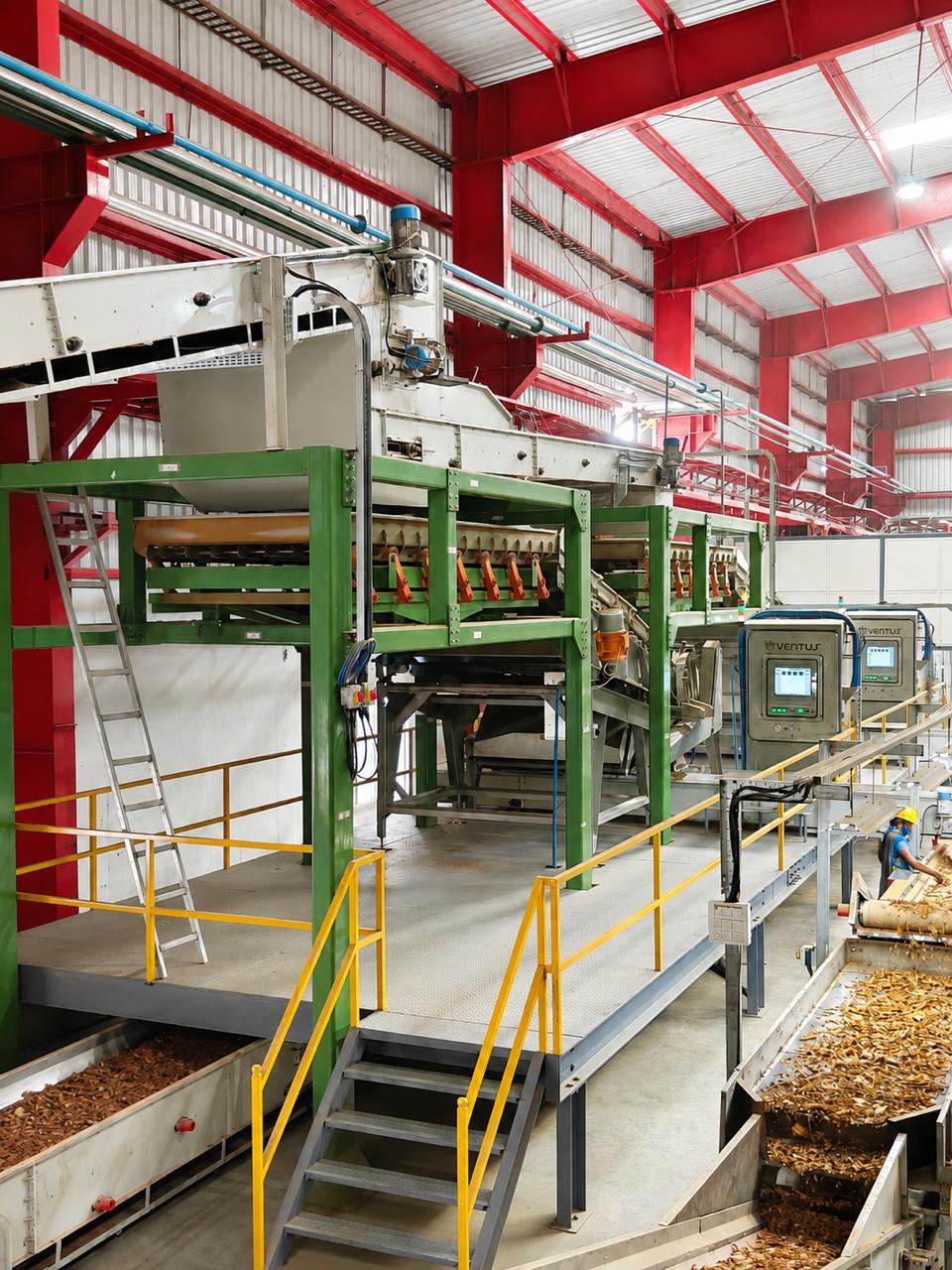
Tobacco is an agricultural product, but producing a high-quality tobacco leaf is only one part of the larger tobacco value chain. Once harvested and cured, tobacco leaf must be handled, conditioned, processed, threshed, separated, dried, inspected and packed with precision.
This is where tobacco leaf processing becomes critical. Modern tobacco processing is designed to transform cured tobacco leaf into a consistent, controlled and usable material while preserving important characteristics of the leaf. For industrial processors, the objective is not simply to move tobacco through a processing line. It is to manage the material carefully at every stage.
Advanced Processing. Proven Capability. Consistent Quality.
Why Is Tobacco Processing Important?
Tobacco leaves naturally vary in colour, texture, moisture, maturity, body, leaf position and chemical characteristics. Even leaves from the same agricultural region can demonstrate differences depending on growing conditions and curing.
A professional tobacco processing company therefore needs systems capable of managing these variations. Processing helps establish greater consistency through controlled operations such as conditioning, blending, threshing, lamina and stem separation, drying, inspection and packing.
The quality of the final processed material depends on how effectively each stage is managed.
The Role of Tobacco Threshing
One of the most important stages of industrial tobacco processing is tobacco threshing. Tobacco leaf consists broadly of lamina and stem components. Industrial threshing and separation systems are designed to separate these components efficiently while maintaining controlled processing conditions.
Modern tobacco leaf threshing is therefore much more than mechanical separation. It involves coordinated stages of conditioning, threshing, separation and handling.
At Tabac Leaf Enterprises, our processing infrastructure incorporates multi-stage tobacco threshing and separation systems designed for industrial-scale operations. Our facilities include a 14 TPH tobacco threshing facility through B.K. Threshers Private Limited in Prakasam District, Andhra Pradesh, together with an 8 TPH tobacco threshing and processing line through Tabac Leaf Enterprises LLP. Together, these facilities provide a combined installed processing capacity of 22 TPH.
From Leaf Receiving to Finished Product
A modern tobacco processing facility follows a carefully controlled sequence. The process begins with leaf receiving and material handling. Depending on the tobacco grade and processing requirements, the leaf may then undergo blending and conditioning before entering the threshing system.
Each stage contributes to process consistency. Conditioning helps prepare the tobacco leaf for subsequent processing. Threshing and separation then help separate the required components. Drying and moisture control support the desired processing condition, while inspection and quality-control systems provide additional checks before packing. This integrated approach is one of the defining characteristics of modern industrial tobacco processing.
Why Conditioning and Moisture Control Matter
Moisture is an important consideration in tobacco processing. Tobacco that is too dry or too moist can behave differently during mechanical processing. Conditioning helps prepare the leaf for controlled processing, while drying systems help manage moisture following processing.
For this reason, a modern tobacco processing plant requires more than threshing machinery alone. It needs supporting infrastructure capable of controlling material movement and processing conditions. At Tabac Leaf Enterprises, conditioning, drying and moisture management form part of the integrated processing cycle.
Processing Different Tobacco Grades
Another reason modern tobacco processing requires technical capability is the diversity of tobacco grades. Tobacco can differ considerably in appearance, body, maturity, colour and chemical characteristics. Tabac Leaf Enterprises' grade catalogue includes categories such as Mysore FCV, Traditional FCV, NLS FCV and Vinukonda Burley.
The grade catalogue provides detailed descriptions covering characteristics such as leaf type, colour, body, maturity and indicative chemistry ranges for nicotine and sugars. This diversity demonstrates why tobacco processing cannot be approached as a one-size-fits-all operation. Processing infrastructure must be capable of handling different materials while maintaining appropriate process controls.
Technology and Process Control
Technology is increasingly important in industrial tobacco processing. Modern facilities can incorporate automated controls, industrial utilities, laboratory infrastructure, dust-collection systems and fire-protection systems to support safe and controlled operations.
Tabac Leaf Enterprises' processing infrastructure includes PLC/SCADA process-control systems, supporting greater visibility and control across industrial processing operations. Technology does not replace experience. Instead, it gives experienced processing teams better tools to manage large-scale operations consistently.
Quality Begins With Process Discipline
Quality in tobacco processing is not determined at a single point. It develops throughout the processing chain. Material handling, conditioning, threshing, separation, drying, inspection and packing all contribute to the final result.
A strong tobacco quality control approach therefore needs to be integrated into the complete processing system. Laboratory and inspection capabilities provide additional support for monitoring material characteristics and maintaining process discipline.
Building the Tobacco Value Chain
Tobacco processing also connects agriculture with industrial manufacturing. While cultivation and leaf production provide the foundation, professional processing transforms that agricultural output into a more controlled industrial material.
Tabac Leaf Enterprises has experience across this broader tobacco value chain, including supporting agricultural experience of approximately 300 acres of tobacco cultivation. However, the company's primary industrial focus remains tobacco processing and threshing. This combination of agricultural understanding and industrial processing experience provides useful perspective across the tobacco value chain.
The Future of Tobacco Processing
The future of tobacco processing will increasingly depend on consistency, technology, efficiency and responsible operations. Industrial processors will need to balance processing capacity with quality control, workplace safety, resource efficiency and environmental considerations.
Advanced automation, better process monitoring, improved dust management and stronger quality systems can contribute to this evolution. For Tabac Leaf Enterprises, the direction is clear: build processing capability that combines infrastructure, technology, experience and disciplined operations.
Conclusion
Tobacco leaf processing is the bridge between agricultural production and industrial tobacco manufacturing. From tobacco leaf threshing and lamina separation to conditioning, drying, quality inspection and packing, every stage plays a role in achieving controlled and consistent processing.
With industrial facilities offering a combined installed capacity of 22 TPH, supported by processing technology, laboratories, automation and quality infrastructure, Tabac Leaf Enterprises is focused on developing a strong position in the tobacco processing industry.